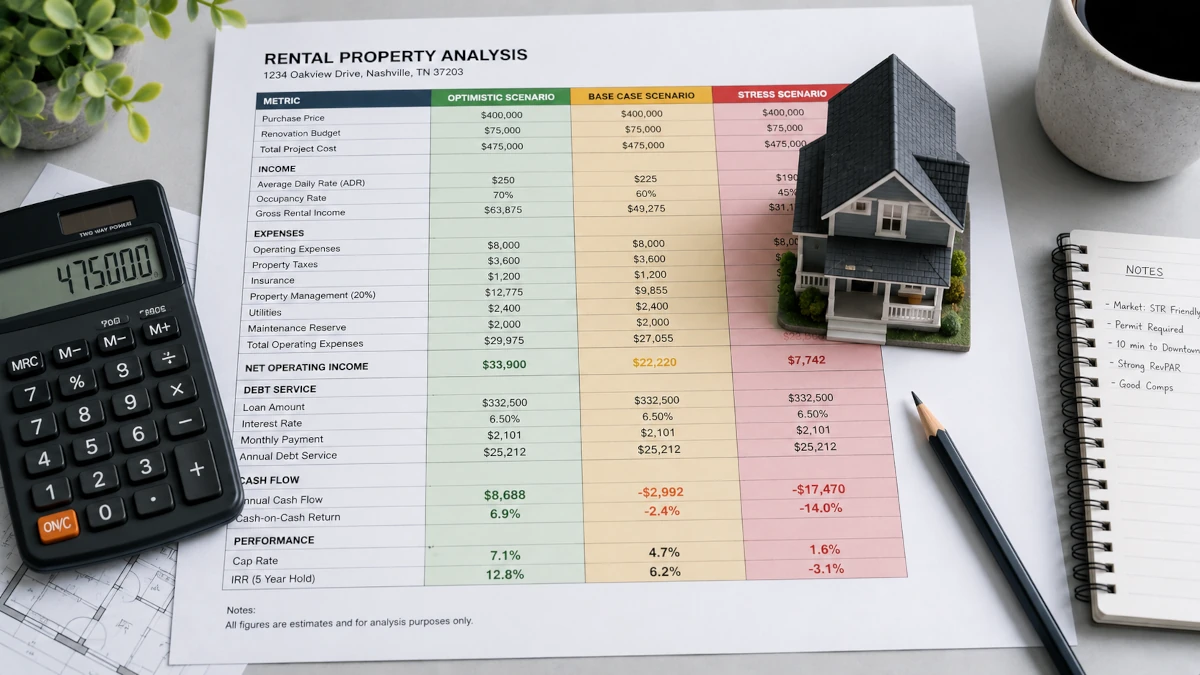
Every article here is written to help you make a better investment decision — not to report the news. Practical breakdowns of DSCR loans, Rental Property Loans, Fix & Flip Loans, Ground-Up Loans, and Non-QM loans — plus the deal analysis and metrics that decide whether a property pencils, each connecting back to our guides, calculators, and live opportunities.
New to evaluating deals? Start with these cornerstone articles — the core metrics and frameworks every other piece builds on.
The two return metrics every investor confuses — what each one measures, and when to trust which.
Read article → Fix & FlipThe back-of-the-napkin rule that tells you your maximum offer — and where it breaks down.
Read article → StrategyHow buy-rehab-rent-refinance-repeat recycles your capital — and the math that makes or breaks it.
Read article →Recent articles from every section of the blog — the quickest way to see what's been added since you last visited.
Try a different keyword, or browse by category using the filter bar above.
How to decide whether a rental qualifies and pencils on its own income — DSCR underwriting, rate ranges, and the math to run before you apply.

Complete breakdown of credit score, down payment, reserves, and property requirements.

What lenders look for, how each tier affects your terms, and strategies to boost your ratio.

Current rate ranges, what factors affect pricing, and how DSCR rates compare to other loan types.

The five places investors get DSCR loans, how they compare, and what to check before you choose a lender.

Credit scores, loan sizes, purchase vs. refinance and top states, from real DSCR loan requests.

Side-by-side comparison covering rates, qualification, speed, and when to use each.

How DSCR loans work for 2–4 unit properties — income calculation, vacancy factors, and qualification.

Entity documents required, personal guarantee expectations, LLC structures, and recourse vs. non-recourse options.

How much you can pull out, LTV limits by property type, seasoning requirements, and how to scale your portfolio.

The four pillars lenders evaluate, how rental income is verified, credit score tiers, and common decline reasons.

The four common prepay structures, what they actually cost, and how to pick a structure that fits your hold plan.

How non-US investors qualify — ITIN, foreign credit, higher down payment, rate premium, and the LLC structure.

What investors actually pay at the table — origination, title, escrow, prepaids, and where to negotiate.

How many months of PITIA lenders actually require, where the cash can come from, and how reserves scale with credit and loan size.

How blanket DSCR portfolio loans work — release clauses, cross-collateralization, and when consolidation actually pays off.

30-year fixed vs. ARMs vs. interest-only vs. 40-year I/O — how each program affects your DSCR ratio, payment, and qualifying amount.

Form 1007, the appraiser's rent schedule, and the “lower of” rule that decides which rent your DSCR is actually calculated on.

How low-ratio and no-ratio programs work when the rent doesn't cover the payment, and how to push your ratio back above 1.0.

What lenders look at when you have no landlord history, the restrictions first-timers sometimes see, and how to prepare.

Typical LTV ranges for purchases and refinances, what pushes the down payment higher, and acceptable sources of funds.
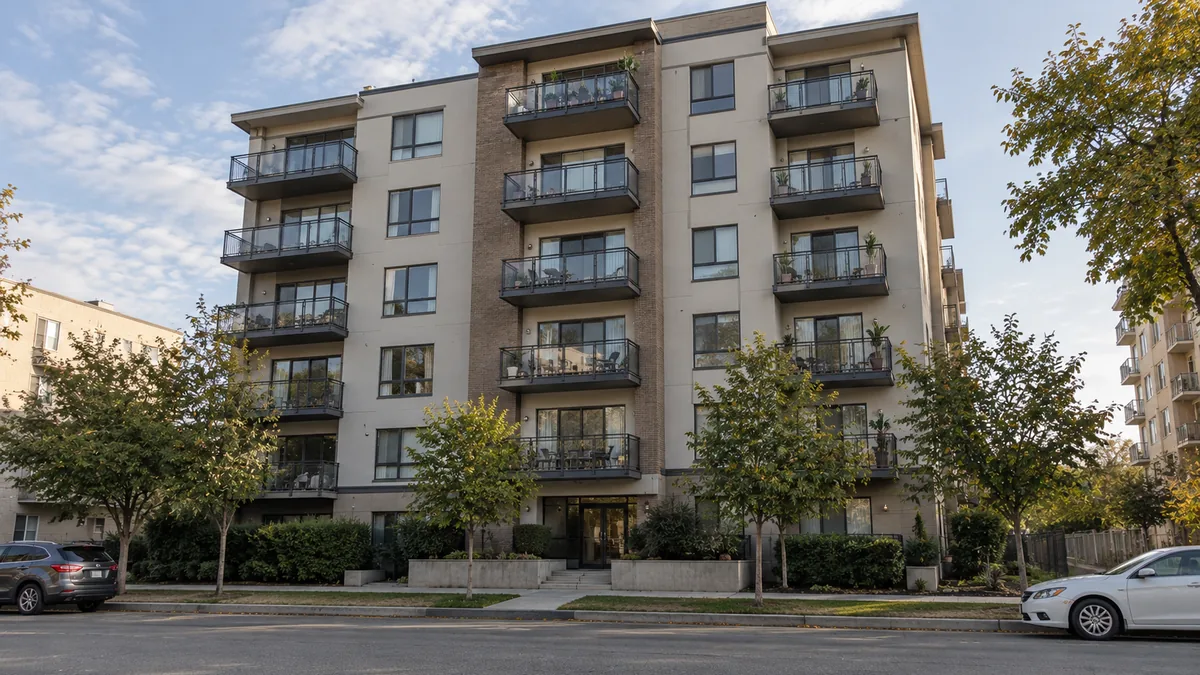
Warrantable vs. non-warrantable condos, the HOA review, and how HOA dues affect your DSCR ratio.

Where qualifying rent comes from with no lease, why refinances get more scrutiny, and how to strengthen the file.
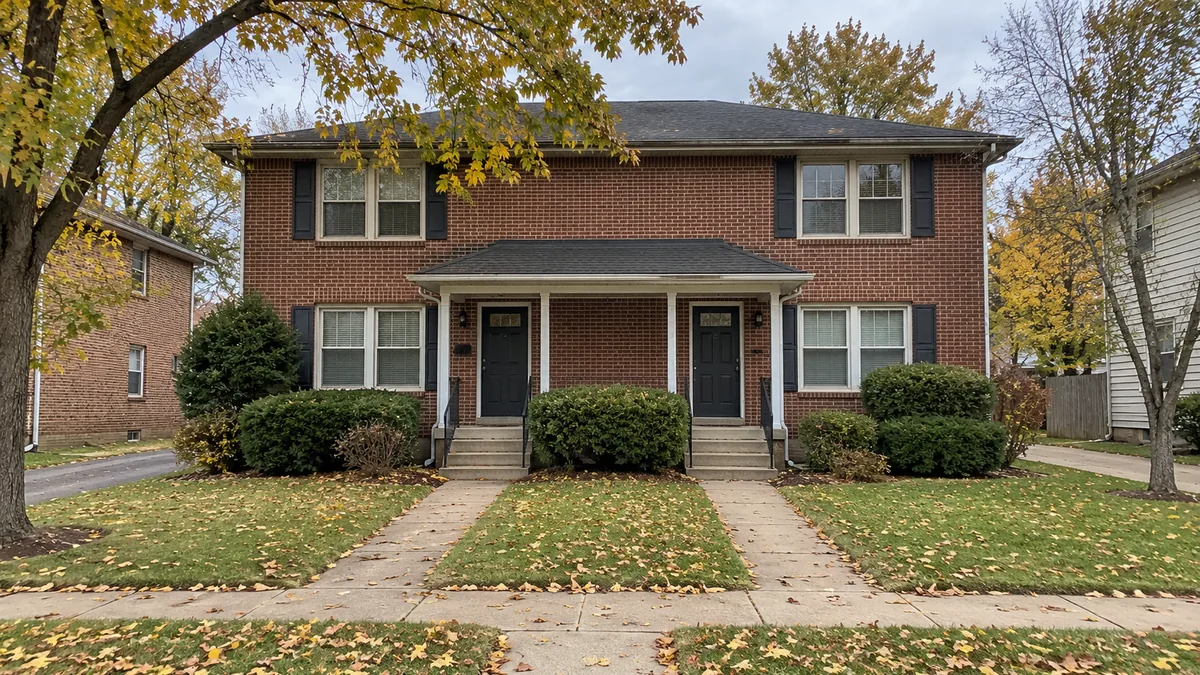
How to get your cash back soon after a cash purchase, how the loan is capped, and what to document.

Two ways to skip tax returns: one qualifies the property, the other qualifies your deposits.

C1–C6 condition ratings, "as-is" vs. "subject to" appraisals, and the repairs appraisers flag most.

How to decide whether a flip is worth pursuing — finding deals with real spread, estimating rehab accurately, and calculating your return before you commit.

Credit score, experience level, down payment, project docs, and reserves — everything lenders want.

How these loan types overlap, where they differ, and when to use each for investment properties.

Finding comps, adjusting for differences, applying the 70% rule, and avoiding estimation mistakes.

Cost benchmarks by category, scoping a property, the bid process, and contingency planning.

Profits, taxes, financing, risk, and the BRRRR strategy — a full comparison of both approaches.

The hidden expenses between purchase and sale that quietly eat your margin — interest, taxes, insurance, utilities.

The four ways to exit a flip — retail sale, wholesale, BRRRR refinance, or seller-financed sale — and how to choose.

MLS filtering, wholesaler networks, driving for dollars, and the off-market sources where flip-worthy deals actually come from.

Why the 70% rule still anchors flip math — and when MAO formulas, ARV-based budgeting, or hard-money pricing override it.

Builder's risk, vacant dwelling, general liability, and workers' comp — the four-policy stack every flip needs (and how to price it).

How experience changes leverage and terms, and how to pick a first deal that finances easily.

How flip loans are sized, the ARV cap, and the full cash it takes to finish a project.

Draw schedules, requests, inspections, interest on undrawn funds, and how to avoid delays.

Which rehab work usually needs a permit, how permits affect draws and timelines, and inherited unpermitted work.

Short-term gains, dealer status, self-employment tax, and how costs reduce taxable profit.

Who covers overruns, change orders, reallocations, extensions, and your options.

Buying at auction, REO, and pre-foreclosure, and refinancing into a rehab loan.

How scope of work changes leverage, experience requirements, draws, and timeline.

JV structures, guarantors, entity documents, and the terms to settle before you buy.
How to evaluate a buy-and-hold for long-term wealth — cash flow analysis, loan options, and the metrics that separate a keeper from a money pit.

Step-by-step cash flow analysis including every expense category, vacancy, and key return metrics.

Cash flow, management, financing, taxes, and risk — a full comparison to choose the right strategy.

Complete overview of conventional, DSCR, fix and flip, construction, FHA, portfolio, and seller financing.

Calculate NOI, cap rate, cash-on-cash return, and DSCR before making an offer — a complete underwriting framework.

Capital recycling strategies, BRRRR, DSCR financing at scale, and a sequencing roadmap from property 1 to 12+.

Screening criteria, lease essentials, move-in documentation, and how to reduce costly tenant turnover.

17 write-offs every landlord should know — mortgage interest, depreciation, repairs, travel, and the deductions most investors miss.

Buy, Rehab, Rent, Refinance, Repeat — the cash-out refinance math that makes the strategy work, with a full worked example.

The 30-day-plus strategy between long-term and short-term — traveling nurses, corporate housing, and 1.5–2x rental income.

How the Housing Choice Voucher program actually pays, what the HQS inspection catches, and how to underwrite a Section 8 deal.

The 25% depreciation recapture tax at sale, how it stacks with capital gains, and how a 1031 exchange or step-up at death eliminates it.
How to decide whether a short-term rental works — projecting revenue, financing your first STR, weighing regulatory risk, and self-manage vs. hire.

How to finance Airbnb and VRBO properties with DSCR loans, including STR income underwriting.

A cost and time comparison to help Airbnb and VRBO investors decide how to manage their properties.

AirDNA, RevPAR, occupancy signals, regulatory risk, and how to evaluate comps before you buy.

The exact requirements, what the badge actually delivers in bookings and rate, and how property managers affect your status.

Budget ranges, durable material choices, a room-by-room checklist, and why professional photography pays for itself.

Cleaning workflows, par stock math, staging references, and the operational systems that protect 5-star reviews.

Why your homeowner policy won’t cover an Airbnb, what AirCover really protects, and the four coverage layers you need.

Demand drivers, AirDNA data analysis, gross yield targets, regulation research, and seasonality planning.

Maximize revenue with RevPAR vs. occupancy, dynamic pricing tools compared, minimum stay strategy, and cleaning fee structure.

The 7-day rule, material participation, depreciation, cost segregation, occupancy taxes, and the 14-day personal use rule.

How to earn 5-star reviews consistently, respond to negative ones, and recover when something goes wrong during a stay.

How to navigate local STR laws before you buy — permits, hosting caps, owner-occupancy rules, and HOA restrictions.

Hot tubs, fast Wi-Fi, EV chargers, workspaces — what actually moves occupancy and ADR, and what's not worth the spend.

Smart locks, noise monitors, dynamic pricing tools, channel managers — the operator-side stack that makes an Airbnb run without you.

Flexible vs. Moderate vs. Firm vs. Strict — how each policy affects booking volume, cancellation rate, and the revenue you actually keep.

Where lenders get projected Airbnb income, how they adjust it, and what to do when the number comes in low.

How lenders document Airbnb income, seasoning rules, and what limits how much cash you can take out.

Rules to check, net-income math, setup costs, and how to finance the switch from long-term to short-term.

What's included, how to verify the seller's revenue, what doesn't transfer, and how lenders finance a furnished STR.

HOA rental rules, non-warrantable buildings, condotels, and how HOA dues affect qualification.

How each loan treats personal use, rental income, and qualification, and how to choose honestly.

Borrower, property, income, and insurance documents for an Airbnb purchase or refinance.

Why lenders annualize income, the partial-year history trap, and reserves for the off season.
How to decide whether to build instead of buy — how construction loans and draws work, hiring the right GC, and when ground-up beats an existing property.

From land acquisition through certificate of occupancy — how to finance and manage a new build.

Milestones, the draw request process, interest on drawn funds, and common mistakes to avoid.

Finding, vetting, and hiring a GC — licensing checks, bid comparison, contract essentials, red flags.

Cost basis, timeline, risk, financing, and the market conditions where each strategy wins.

Off-market sourcing channels, the five-part feasibility screen, due diligence costs, and how to structure the offer.

How C2P loans work — single-close vs two-close, conversion mechanics, rate-lock options, and when C2P beats two separate loans.

A realistic phase-by-phase schedule from permits to certificate of occupancy, with the milestones that actually drive timing.

Current $/sqft benchmarks for investor spec builds by US region and finish level, plus what's risen fastest in 2026.

Zoning, entitlements, plan check, building permits — the full pre-construction approval path and how long each phase actually takes.

Two exits, two financing paths, two different finish levels — how to pick the right ground-up strategy for your market and capital plan.

How to qualify without a build track record: GCs, partners, smaller projects, and equity.

How land equity counts, how lenders value it, and the cash you'll still need.

How both are sized and drawn, and how to keep a construction budget from running dry.

ADU types, zoning questions, financing options, valuation, and exit strategies.

Zoning, design and cost differences, 2–4 vs. 5+ unit lending, and exits.
How to evaluate any listing with confidence — reading the key metrics, spotting what the numbers hide, and moving from analysis to a financing decision.

NOI, cap rate, cash flow, DSCR, and cash-on-cash return — a full step-by-step underwriting walkthrough with a worked example.

These two metrics answer completely different questions — here is when to use each and why the distinction changes how you evaluate every deal.

How these classic screens actually work, where they break down in today’s markets, and how to use them without letting them block good deals.

What IRR measures that cap rate and cash-on-cash don't, how to calculate it from a cash flow projection, and target ranges.

How to stress-test a pro forma — downside, base, and upside cases, break-even tests, and the four variables that move returns most.

How GRM and price-to-rent work as a 30-second screening filter — benchmarks by market, what they miss, and when to upgrade to cap rate.

What OER measures that cap rate misses — benchmark ranges by property type, and how it surfaces both hidden value-add and hidden risk.