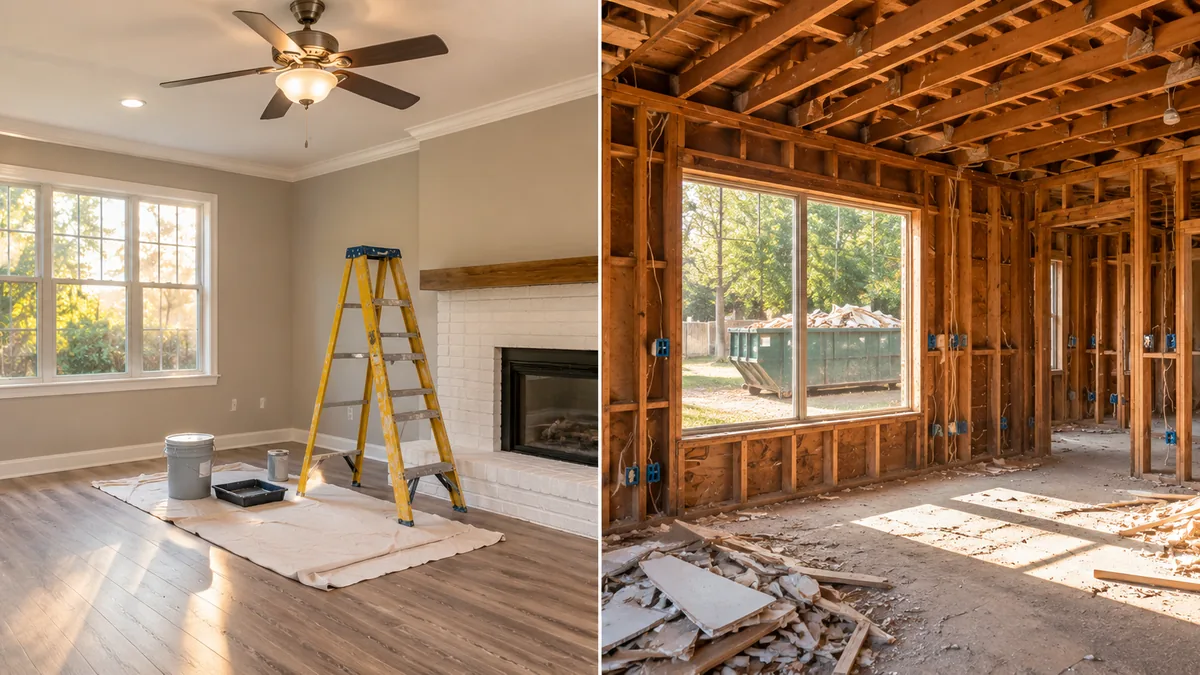
A flip that needs paint, flooring, and new fixtures is a very different project from one that needs a new roof, rewiring, and a wall moved. Lenders know that. Your scope of work is one of the main things they use to judge risk, so it affects how much they'll lend, what experience they want to see, and how the rehab money is released.
This guide explains how scope is usually classified, how it changes your loan, and how to present your plan so it reads as well-thought-out.
There's no industry-wide definition, and each lender draws its own lines. But projects generally fall into three groups:
| Scope | Typical work | Typical complexity |
|---|---|---|
| Light (cosmetic) | Paint, flooring, fixtures, hardware, landscaping, cabinet and counter replacement in the same layout | Few or no permits, short timeline, fewer draws |
| Moderate | Full kitchen and bath remodels, a new roof, HVAC or water heater replacement, windows, some electrical and plumbing updates | Some permits, more trades to coordinate |
| Heavy | Structural repairs, foundation work, full rewiring or re-plumbing, moving walls, additions, converting space into bedrooms or baths | Plans and permits, inspections, longer timeline, more draws |
Some lenders also classify projects by budget size, such as how large the rehab budget is compared to the purchase price or the as-is value. A big budget on a cheap house can be treated as heavy even if the work itself is mostly cosmetic.
Flip loans are usually limited by both the total project cost and the after-repair value. On a heavy rehab, more of the final value depends on work that hasn't been done yet, so some lenders lower the leverage they'll offer. Others keep similar leverage but tighten other requirements. Terms vary by lender.
A cosmetic flip is often a reasonable first project. For structural or major-system work, lenders commonly want to see completed projects of similar scope, or an experienced contractor or partner on the deal. See fix and flip loans for first-time flippers.
Every rehab loan needs a line-item scope and budget. Heavy rehabs usually need more: architectural or engineering plans, permit applications, a detailed contractor bid, and sometimes a feasibility review by the lender or a third party.
Larger projects are usually split into more draw stages, each with an inspection. That keeps money flowing as work is finished, but it also means more coordination. See how fix and flip draws work.
Heavy rehabs take longer. Make sure the loan term covers permits, inspections, and a realistic construction schedule, with room to sell afterward.
Large additions, second stories, or tearing a house down to the foundation can push a project beyond a standard flip. Some lenders treat significant additions closer to ground-up construction, with construction-style budgets, plans, and draw schedules. If your plan adds substantial square footage, ask early how your lender will classify it. Our ground-up construction guide covers how those loans work.
The heavier the scope, the more likely you'll need permits, and the more they matter at sale. Unpermitted structural work, added bedrooms, or new bathrooms may not count toward value with the buyer's appraiser. Check local rules before you buy. See fix and flip permits.
A clear scope of work makes approval smoother and draws faster, whatever the size of the project. Include:
If you're early in your flipping career, consider building a track record with lighter projects before taking on structural or major-system work. Each completed flip, documented with before-and-after photos and closing statements, strengthens the case for a bigger project next time. If you want to take on a heavy rehab now, bringing in an experienced partner or contractor can help close the gap.
The more work a property needs, the more of its value depends on execution, and lenders adjust for that through leverage, experience requirements, documentation, and draw structure. Know where your project falls before you apply, present a detailed scope of work, and make sure your loan term fits a realistic schedule.
Get Funded
Fast hard-money and bridge financing built for flips — competitive terms so you can close and start the rehab.
Check Your EligibilityFunding in as little as 7 days · No impact to your credit score
There is no universal definition. Heavy rehab usually involves structural work, major system replacements, layout changes, or additions. Some lenders also classify projects by the size of the rehab budget relative to the purchase price or as-is value.
Often, yes. Lenders may look for more experience, require permits and plans, review the contractor more closely, and in some cases offer lower leverage. Requirements vary by lender.
Yes. Lenders typically want a line-item scope and budget for any rehab they finance, even a cosmetic one. It sets the draw schedule and supports the after-repair value.
Usually. Additions bring permits, plans, and longer timelines, and some lenders treat significant additions closer to ground-up construction than a standard flip.