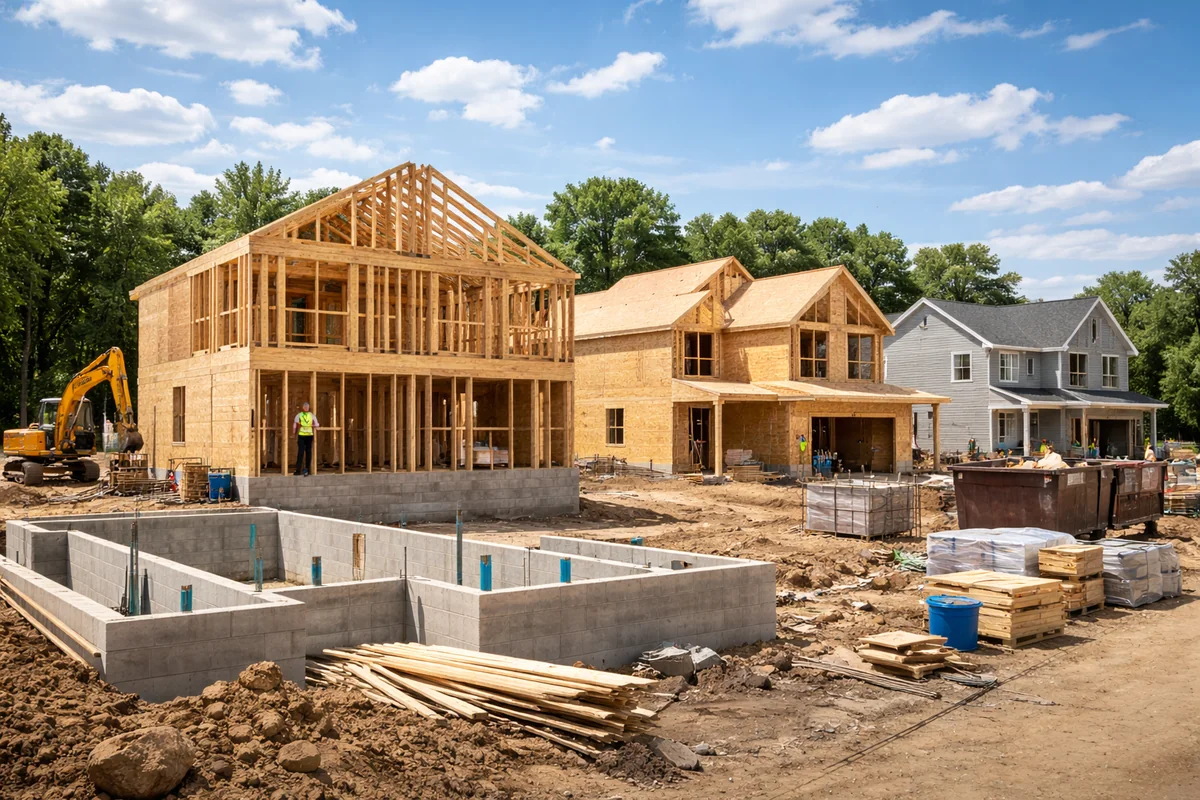
Ground-up construction offers the highest profit margins in real estate investing, but it also carries the most complexity. This guide walks you through the essential steps of financing and building your first new construction project.
Every construction project starts with the lot. When evaluating land, consider zoning restrictions, utility access, topography, soil conditions, and proximity to comparable sales that support your projected value. Perform a feasibility study before committing: can you actually build what you want on this lot, at a cost that leaves profit?
Some construction lenders will finance the land purchase as part of the construction loan. Others require you to own the lot free and clear before applying. If you already own the land, its equity counts toward your down payment.
Construction lending is a team sport. You need:
Your GC's track record is critical for loan approval. Most lenders require the builder to have completed 3-5 comparable projects in the past 2-3 years.
Lenders require a detailed, line-item construction budget covering every cost category: site work, foundation, framing, roofing, mechanicals, insulation, drywall, finishes, landscaping, permits, and contingency. Build in a 10% contingency buffer for unexpected costs — because there will be unexpected costs.
Create a month-by-month construction schedule that aligns with your draw stages. Be realistic about timelines; optimistic scheduling is one of the most common mistakes in construction projects.
Construction loans typically fund 75-85% of total project costs and are capped at 65-75% of the completed value. Both limits must be met. You will need:
Once funded, your job is to manage the construction process: coordinate with your GC, submit draw requests on time, monitor the budget, and solve problems as they arise. The draw schedule keeps the project on track financially, but staying on top of the timeline is equally important. Every month of delay adds interest expense and erodes your profit margin.
When construction is complete and you have your certificate of occupancy, you have two options:
For a deep dive into every aspect of construction financing, read our complete ground-up construction loan guide.
BrightPath connects investors with top-rated lenders. Fast closings, competitive rates.
See Available Programs