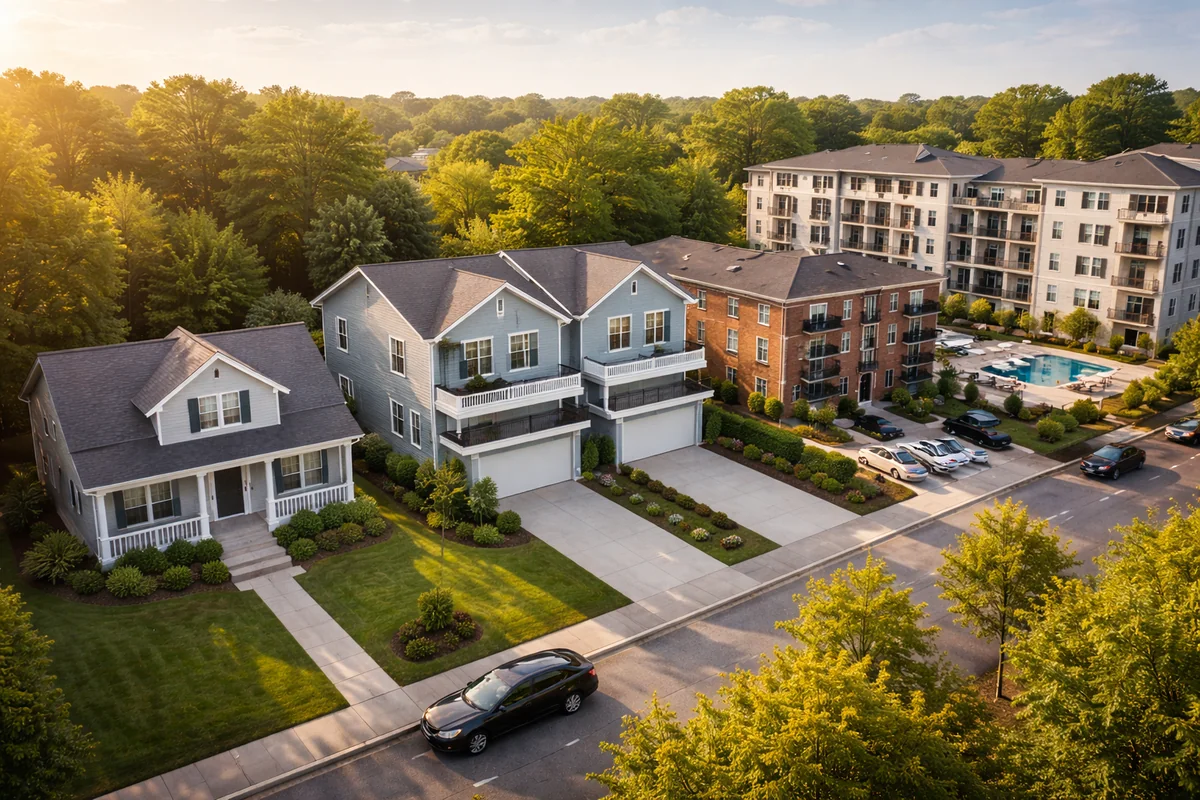
The right loan depends on where you are in your investing journey, what kind of property you are buying, and what you plan to do with it. Here is a complete overview of every major financing option available to real estate investors in 2026.
Best for: First-time investors with strong W-2 income and fewer than 10 financed properties.
Conventional loans offer the lowest rates (6-7.5%) but require full income documentation, a DTI ratio below 45%, and hold you to a 10-property cap. Properties must be held in your personal name. These are the starting point for most investors.
For a detailed comparison, read DSCR vs conventional loans.
Best for: Scaling investors, self-employed borrowers, and anyone who wants LLC ownership.
DSCR loans qualify based on the property's rental income, not your personal income. Rates run 6.5-8.5%, but the trade-off is worth it: no income docs, unlimited properties, LLC ownership, and 21-30 day closings. This is the dominant loan product for investors with 5+ properties.
Best for: Active investors who buy, renovate, and sell properties for profit.
Fix and flip loans are short-term (6-18 months), interest-only, and include renovation funding through a draw schedule. Rates of 9-13% are higher than long-term products, but the fast closing speed (as little as 7 days) and ability to finance distressed properties make them essential for flippers.
Best for: Experienced investors building new properties from scratch.
Construction loans fund everything from land purchase through completed build. Terms of 12-24 months, rates of 9-13%, and strict requirements (construction experience, licensed GC, detailed plans). The highest profit potential but also the most complexity.
Best for: First-time investors willing to live in one unit of a multifamily property.
FHA loans allow as little as 3.5% down on 2-4 unit properties if you live in one unit. This is the lowest-cost entry into real estate investing. You can rent the other units to cover most or all of the mortgage, then move out after one year and convert to a full rental.
Best for: Investors with 5+ properties looking to consolidate under one loan.
Portfolio loans from community banks offer flexible underwriting and relationship-based approval. Blanket loans cover multiple properties under a single note, simplifying management. Rates are typically 7-9% with shorter terms (5-10 year balloons). Read more in our rental property loans guide.
Best for: Investors who want to tap equity in their primary residence or existing investment properties to fund new purchases.
A HELOC provides a revolving credit line at relatively low rates (7-9% in 2026). This can be used for down payments on investment properties, renovation costs, or bridging gaps between deals. The risk: your home is collateral, so only use this strategy if you have a high degree of confidence in the investment.
Best for: Deals where the seller is motivated and willing to act as the lender.
The seller carries a note instead of requiring you to get a bank loan. Terms are negotiable and can include lower down payments, flexible credit requirements, and creative structures. Seller financing is rare but powerful when available — it works best with older sellers who own properties free and clear and want steady income.
Most investors use multiple products throughout their career. The typical progression: FHA/conventional for properties 1-4, a mix of conventional and DSCR for properties 5-10, then primarily DSCR and portfolio lending beyond 10 properties. Fix and flip and construction loans are used as needed for active projects regardless of portfolio size.
The key is matching the loan product to the deal, not trying to force every deal into the same financing box.
Get Funded
Long-term rental financing that qualifies on cash flow — scale your portfolio without the income docs.
Check Your EligibilityFunding in as little as 7 days · No impact to your credit score