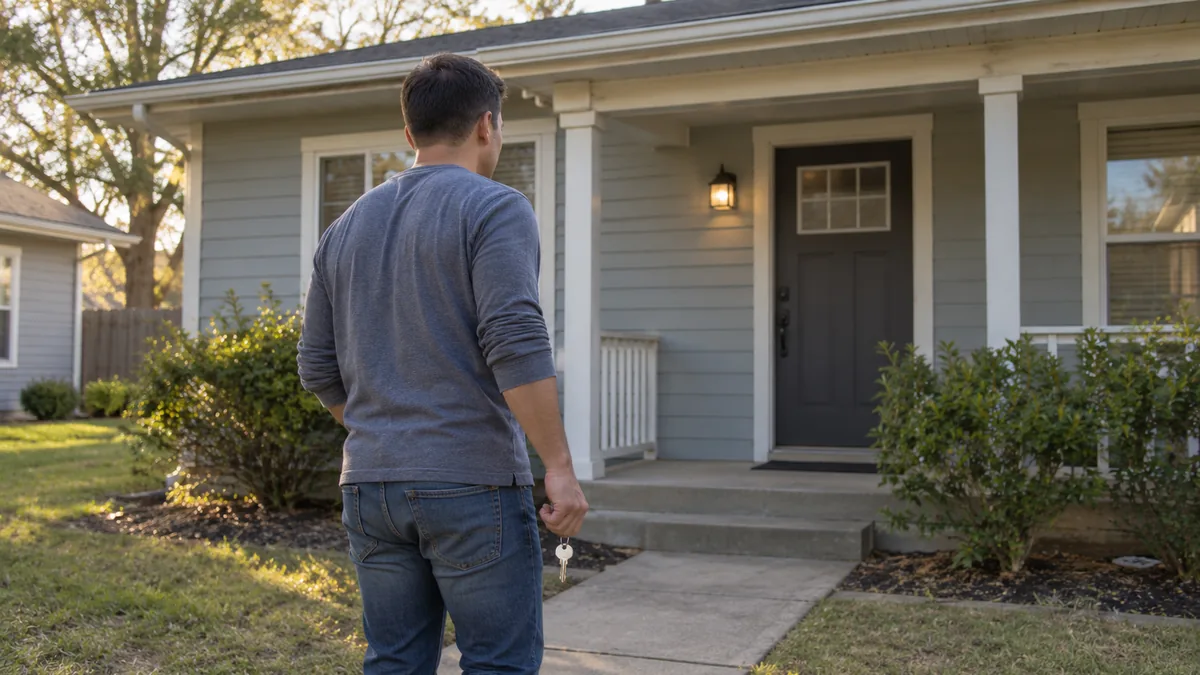
A common belief among new investors is that DSCR loans are only for experienced landlords. That isn't how most programs work. Because a DSCR loan qualifies on the property's rental income rather than your personal income or résumé, many programs are open to borrowers buying their very first rental. What changes for first-timers is usually the terms, not whether you can apply.
For the product overview, including who qualifies and typical terms, see our page on DSCR loans for rental property investors.
This guide covers what DSCR lenders look at when you have no rental history, the restrictions that sometimes apply, and how to put together a file that's easy to approve.
Conventional investment-property loans lean heavily on your tax returns, W-2s, and debt-to-income ratio. For a first-time investor with a busy W-2 job, a recent career change, or self-employment income, that can be a real obstacle. DSCR underwriting shifts the focus to the deal itself:
Notice what isn't on that list: years of landlord experience. Our guide to how DSCR loans are underwritten walks through each factor in more detail.
Lenders view experience as one factor in risk, so some programs adjust terms for borrowers without a rental history. Programs vary, but these are the adjustments that come up most often:
| Area | What may change for a first-time investor |
|---|---|
| Leverage | A somewhat lower maximum loan-to-value than an experienced investor would get |
| Reserves | More months of PITIA required in the bank after closing |
| DSCR floor | Some programs require a ratio of 1.0 or higher instead of allowing sub-1.0 files |
| Property type | Restrictions on short-term rentals, larger multifamily, or non-warrantable condos |
| Homeownership | Some programs ask whether you currently own your primary residence |
None of these is universal. One lender may treat a first-time investor exactly like anyone else, while another adds two or three of these conditions. That's why comparing more than one option matters on a first deal.
One restriction catches people off guard: some DSCR programs limit financing for borrowers who don't currently own a home, whether a primary residence or a rental. Lenders who apply it want some evidence that you've managed a mortgage before. If you rent your own home, ask about this early. Plenty of programs don't apply it, and knowing up front saves time.
The easiest first DSCR loan is on a property that clearly carries itself. When you're comparing options, the ones below tend to move through underwriting with the fewest conditions:
Before you make offers, run the numbers using realistic rent, taxes, insurance, and any HOA dues. Our article on what counts as a good DSCR ratio shows how to calculate it.
DSCR files are lighter than conventional ones, but you'll still need a few things. Gathering them before you go under contract keeps the timeline short:
A first-time investor can absolutely qualify for a DSCR loan. The program looks at the property's income, your credit, and your cash, not your landlord history. Some lenders adjust leverage, reserves, or property eligibility for first deals, so the smart move is to pick a property that clearly carries its payment, keep extra cash on hand, and compare more than one option. For the full checklist, see DSCR loan requirements in 2026.
Get Funded
Qualify on the property's rental income — no tax returns, no W-2s. See your rate and terms in minutes.
Check Your EligibilityFunding in as little as 7 days · No impact to your credit score
Yes. Most DSCR programs don't require prior landlord experience because they qualify on the property's rental income. Some programs adjust terms for first-time investors, such as a lower maximum loan-to-value or higher reserve requirements.
Not always. Some DSCR programs limit financing for borrowers who don't currently own a primary residence or other property, while many others don't apply that rule. If you rent your home, ask about it early in the process.
Sometimes. Short-term rental DSCR financing is available, but some programs restrict it to borrowers with prior experience or apply stricter terms. A long-term rental is often the simpler first deal.
Plan for the down payment, closing costs, and reserves. Down payments on DSCR purchases commonly start around 20 to 25 percent, and first-time investors may see somewhat higher requirements. Reserves are typically several months of the property's full payment.