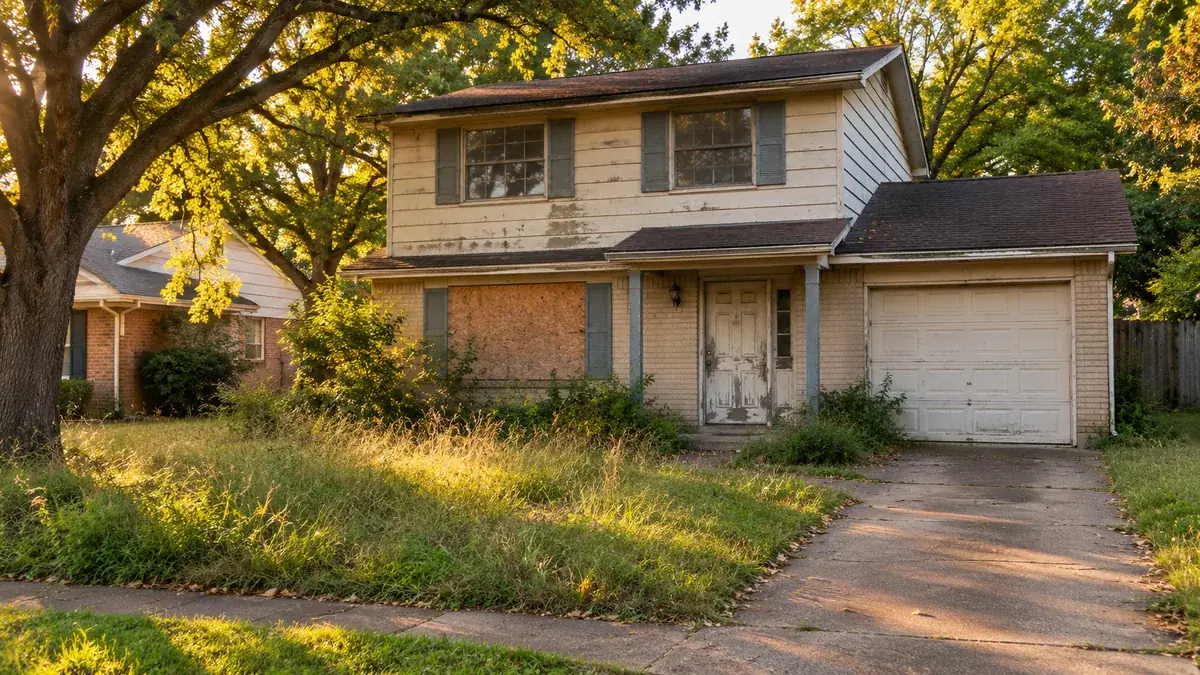
Foreclosures and bank-owned homes attract flippers for a reason: they're often priced below market and need exactly the kind of work a flip provides. But the way you buy them changes how you can finance them. A courthouse auction doesn't wait for an appraisal, and a bank selling an REO has its own contract terms and deadlines.
This guide walks through the three main stages of a distressed purchase, how each one is typically financed, and the risks to check before you bid.
| Stage | Who's selling | How it's usually bought | Financing |
|---|---|---|---|
| Pre-foreclosure | The owner, before the sale | Direct deal or short sale | Standard flip loan, though short sales can take longer to close |
| Foreclosure auction | Trustee or sheriff | Public bid, often cash due at or soon after the sale | Usually cash first, then refinance |
| Bank-owned (REO) | The lender, after the auction | Purchase contract, often through an agent | Standard flip loan with proof of funds or approval |
Trustee and sheriff sales generally require payment in cash or certified funds, either at the sale or within a short window. Rules vary by state and county. That timeline is usually too fast for a loan with an appraisal, title work, and underwriting. So most investors who buy at live auctions follow a two-step approach:
Ask lenders before the auction whether they refinance recent auction purchases, what they need to see, and how they value the property. Requirements vary. Some lenders need clear title insurance, a recorded deed, and confirmation that the property is vacant before they'll close.
Some online auction platforms run on a different timeline and allow financed buyers to close within a set period after winning. Read each platform's terms carefully, because missing the closing deadline can mean losing your deposit.
If you plan to hold the property as a rental instead of flipping it, the same buy-cash-then-refinance idea works with a DSCR loan. See delayed financing with a DSCR loan.
Bank-owned and pre-foreclosure purchases go through a contract, so they can usually be financed with a regular fix and flip loan. A few things are different from a typical sale:
For what lenders look at on any flip, see fix and flip loan requirements.
Depending on the type of sale and the state, some liens can survive a foreclosure, such as certain tax liens, HOA liens, or code enforcement fines. Run a title search before the auction, not after. Your refinance lender will require clean, insurable title.
At most auctions you can't inspect the inside. Use what you can find: past listing photos, permit history, the age of the home, and what you can see from the street. Then add a larger contingency than you would on a home you could walk through.
Former owners or tenants may still be living in the home. Removing occupants follows a legal process that varies by state, and it takes time. Build that into your schedule and budget.
Some states give the former owner a period after the sale to buy the property back. That can limit what you can do with the property, and whether a lender will refinance it, until the period ends.
A distressed purchase only works if the discount covers the extra risk. Before you bid, work out:
Our guide to finding fix and flip deals covers where these properties come from.
Live foreclosure auctions usually require cash, so most investors buy first and refinance into a rehab loan afterward. REO and pre-foreclosure homes can usually be financed with a standard flip loan, as long as your timeline fits the seller's terms. Whatever the stage, research title, budget for what you can't see, and line up your lender before you bid.
Get Funded
Fast hard-money and bridge financing built for flips — competitive terms so you can close and start the rehab.
Check Your EligibilityFunding in as little as 7 days · No impact to your credit score
Usually not directly. Many trustee and sheriff sales require cash or certified funds at the sale or within a short window, which is faster than most loans can close. Investors often buy with cash, then refinance into a rehab loan afterward.
Yes. REO properties are usually bought through a standard purchase contract, so they can often be financed with a fix and flip loan. Banks typically want proof of funds or a financing approval with your offer.
You often can't see the interior, title issues or liens may survive the sale, occupants may still be in the home, and some states have redemption periods. Research title and budget extra contingency.
Use exterior condition, age, public records, past listing photos, and comparable rehabs to estimate, then add a larger contingency than you would on a property you could inspect.