Your location, property quality, and amenities set the ceiling on what your STR can earn. Your pricing strategy determines how close you get to that ceiling. Investors who set a rate once and leave it rarely capture more than 60–70% of their market’s available revenue. Those who price dynamically and refine their strategy over time consistently outperform their market. Here is how to do it.
Most new STR investors optimize for occupancy — they want every night booked. This is the wrong goal. A calendar full of low-rate bookings is less valuable than 65% occupancy at a strong nightly rate. The metric that captures both dimensions is RevPAR (Revenue Per Available Room/Night):
When comparing your performance to competitors or benchmarking against AirDNA market data, always use RevPAR rather than occupancy or ADR in isolation. A property with 90% occupancy at $100/night is underperforming one with 65% occupancy at $190/night.
Before using any pricing tool, do manual comp research to anchor your price to the market:
Your base rate should land you in the middle of the competitive set for your quality tier — not at the bottom (signals low quality) and not at the top until you have reviews that justify a premium.
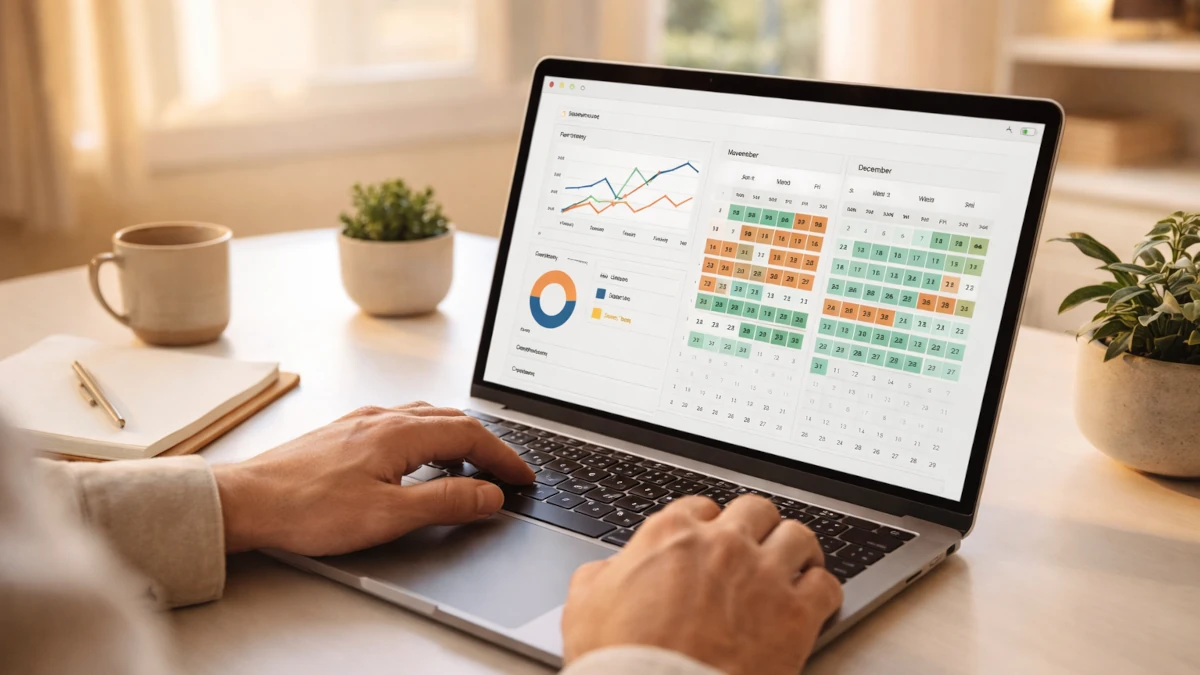
Static pricing — charging the same rate every night — leaves money on the table during high-demand periods and keeps you unbooked during slow ones. Dynamic pricing tools solve this by automatically adjusting your rates based on real-time market signals:
| Tool | Best For | Approx. Cost |
|---|---|---|
| PriceLabs | Most customizable; preferred by experienced investors managing multiple properties | ~$19.99/mo per listing |
| Wheelhouse | Clean interface; good for beginners; strong market data visualization | 1% of revenue or flat fee |
| DPGO | AI-driven; competitive on price; solid for straightforward markets | ~$9.99/mo per listing |
| Beyond | Broad market coverage; good integration with major PMS platforms | 1% of revenue |
| Airbnb Smart Pricing | Free but conservative; tends to underprice — use only as a floor | Free |
Most investors who switch from static pricing or Airbnb Smart Pricing to a dedicated tool like PriceLabs or Wheelhouse report 15–30% revenue increases within the first 90 days.
Minimum night requirements directly affect your occupancy pattern and cleaning cost efficiency:
Many experienced investors use a hybrid approach: longer minimums (3–5 nights) for peak season when demand is strong, dropping to 2-night minimums for shoulder periods and last-minute gaps within 7–14 days of the stay date.
Cleaning fees are one of the most searched complaints on Airbnb. A $300 cleaning fee on a $100/night listing drives travelers away. How to handle it:
For the financing side of STR investing, see our guides on DSCR loans for Airbnb and how to choose an STR market.
Get Funded
DSCR financing that qualifies on projected STR income — built for Airbnb and vacation-rental investors.
Check Your EligibilityFunding in as little as 7 days · No impact to your credit score