Most construction guides start the clock at the point of breaking ground. But the most consequential decision in any ground-up project happens months earlier, when you pick the lot. The land determines what you can build, how much it will cost, how long it will take, and what the finished property will be worth — and unlike most construction variables, you cannot fix a bad lot with better decisions later.
This guide walks through how investors find, evaluate, and lock up land for a ground-up build. For the financing and construction side of the project, read our step-by-step construction guide and draw schedule explainer.
The MLS is the starting point for most new ground-up investors, but it is rarely the best source. The most profitable lots are sourced off-market. Here are the channels in rough order of deal quality.
Regional production builders and small custom builders often control more lots than they can absorb, especially in softer markets. These lots are already entitled, usually have utilities stubbed to the property line, and sometimes have approved building plans ready to pull a permit. Call builders directly and ask if they have excess lots for sale.
County tax lien lists and probate filings often include vacant parcels where owners have stopped paying taxes or heirs are motivated to liquidate. These require more due diligence but can be 30-50% below market.
Pull a county assessor record of vacant parcels in your target zip codes and mail a simple offer letter. Response rates are low (1-3%), but the deals that come from this channel have no competition.
County surplus property auctions, bank foreclosure auctions, and services like Bid4Assets often have land parcels with no bidders. Terms can be cash-only and as-is, but prices are often a fraction of appraised value.
Use MLS land filters for days-on-market over 180, price drops greater than 10%, and listings with vague descriptions. Motivated sellers often end up on the MLS after other channels fail.
Before you make an offer or even do an in-depth site visit, a buildable lot should pass five quick feasibility checks. This screen takes 30-45 minutes per parcel and eliminates 80% of land that looks good on paper but will not pencil.
Pull the parcel's zoning designation from the county GIS portal. Confirm:
This is the single most expensive variable. Check each:
A lot with no utilities can easily require $40,000 to $100,000 in site prep before you can even break ground on the house.
The lot must have legal and physical access to a public right-of-way. An easement across another property is legal access, but it is a second-class arrangement that can become a financing problem. Confirm:
Pull comps for finished homes in a 1-mile radius. Filter for the same build year, size, and finish level you plan. If finished-home comps support $600,000 and your all-in land + construction cost is $540,000, you have a deal. If comps cap at $450,000, no amount of clever construction saves this.
The math is the same framework you would use to underwrite any investment property — but with construction cost in place of purchase price, and the ARV role played by the finished new-construction comp.
A professional land evaluation before closing typically includes:
Total: $2,500 to $6,500 in due diligence before you close. Build this into your acquisition budget.
Three terms matter more than price in a land offer:
Sellers of vacant land usually care more about closing certainty than price, so a cash offer with tight financing contingencies often beats a higher offer with financing hurdles.
Most construction loans fund the vertical build and pay off the land as part of the first draw — but only if you already own it. Options for land acquisition:
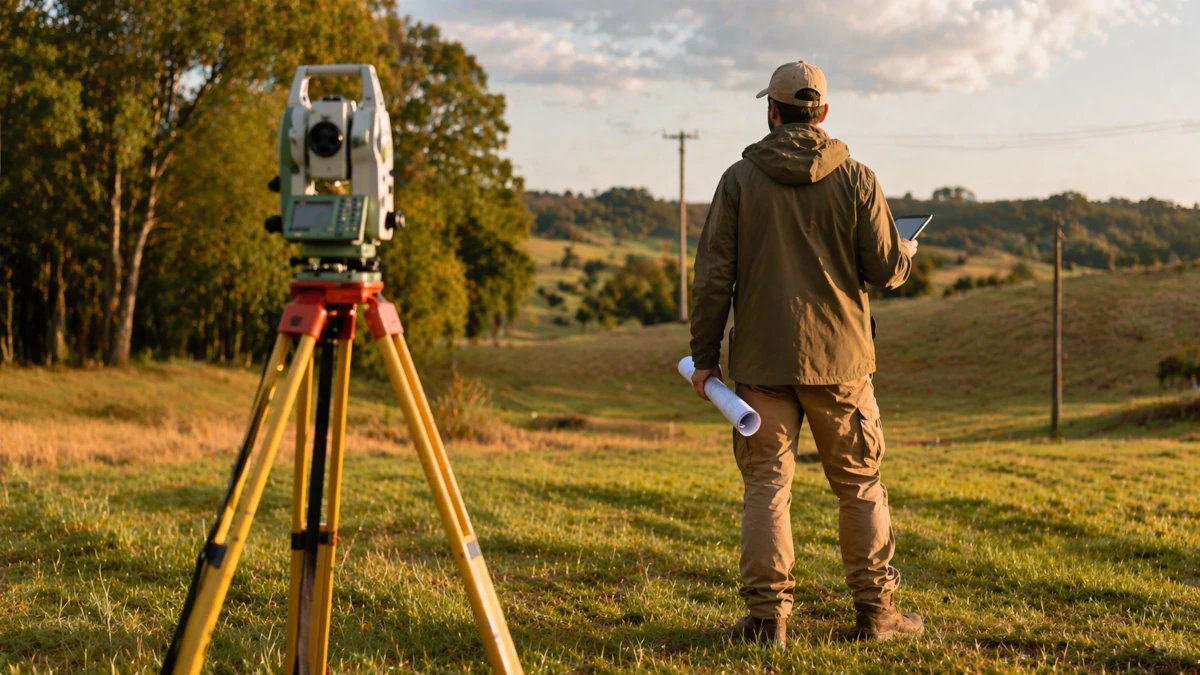
Never close on land you have not walked in person. Even with all five feasibility checks passed on paper, the site visit will tell you things the maps cannot: drainage behavior after rain, tree count and value, neighboring property condition, noise from nearby roads or rail, and whether the lot feels like a place a buyer will pay a premium to live. Walk the perimeter, stand where the foundation will go, and take 30 photos from every angle. Then decide.
Get Funded
Construction financing structured around your draw schedule — line up the build before you close.
Check Your EligibilityFunding in as little as 48 hours · No impact to your credit score