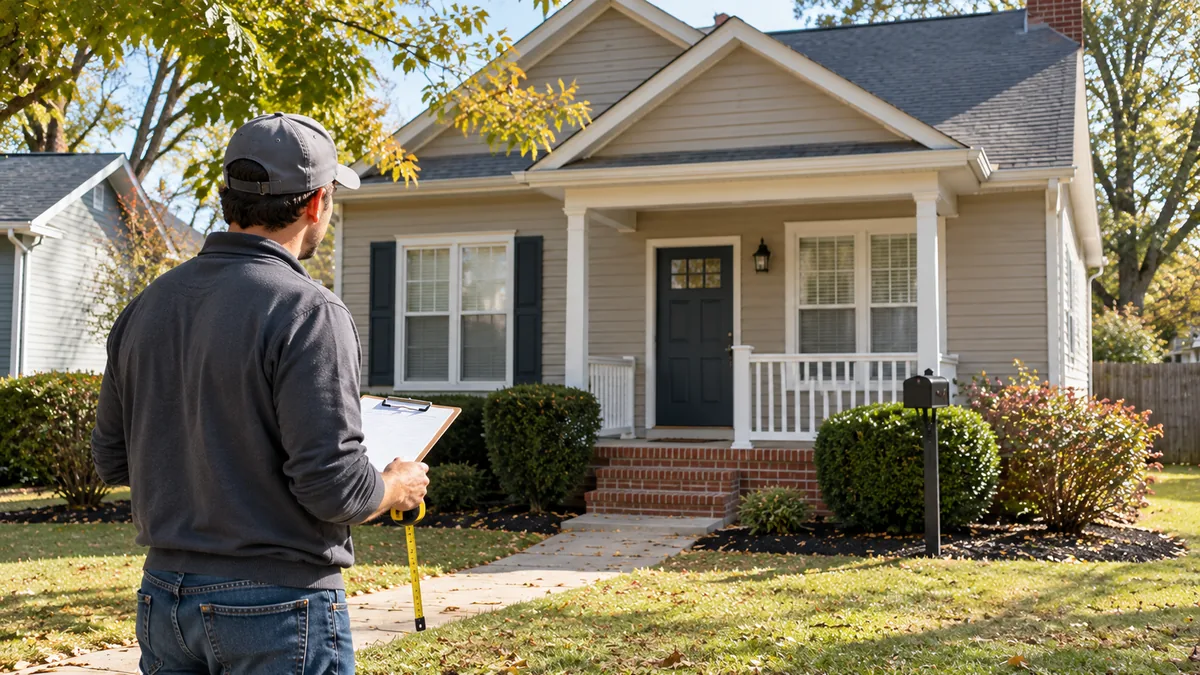
Most investors focus on two numbers from a DSCR appraisal: the value and the market rent. But the appraiser also rates the property's condition, and that rating can decide whether the loan closes on time, closes after repairs, or doesn't fit a DSCR program at all.
DSCR loans are designed for rentable properties. A home that needs a new roof or has no working kitchen is a renovation project, and it's usually financed differently until the work is done.
Standard residential appraisals use a six-step condition scale, from C1 to C6:
| Rating | What it generally means |
|---|---|
| C1 | New or never occupied |
| C2 | Recently renovated, little to no wear |
| C3 | Well maintained, normal wear |
| C4 | Adequately maintained, some minor deferred maintenance |
| C5 | Obvious deferred maintenance, some significant repairs needed |
| C6 | Substantial damage affecting safety, soundness, or structure |
Most rentals fall in the C3 to C4 range. Many DSCR programs want C4 or better. A C5 or C6 rating, or any item affecting safety, soundness, or structural integrity, typically has to be fixed before the loan can close.
The appraisal will be completed one of two ways:
Some programs allow a repair escrow or holdback for small, non-safety items, such as exterior paint when weather prevents the work. Availability varies, so ask early if you expect minor issues.
Condition doesn't only affect eligibility. The appraiser adjusts market rent for condition when comparing your property with nearby rentals. A dated or worn unit may get a lower rent estimate than an updated one down the street, which lowers your ratio. Our guide to DSCR appraisals and Form 1007 covers how those rent adjustments work.
If a property would likely rate C5 or C6, a DSCR loan usually isn't the right first loan. Investors often buy with a fix and flip or bridge loan, complete the renovation, place a tenant, and then refinance into a DSCR loan once the property is rent-ready. See fix and flip exit strategies and the BRRRR strategy for how that sequence works.
A DSCR appraisal checks condition as well as value and rent. Properties in average or better shape usually close as-is. Safety and structural issues have to be fixed first, which adds time and a re-inspection. Clear the easy items before the appraisal, and save DSCR financing for properties that are ready to rent.
Get Funded
Qualify on the property's rental income — no tax returns, no W-2s. See your rate and terms in minutes.
Check Your EligibilityFunding in as little as 7 days · No impact to your credit score
Many DSCR programs want an appraisal condition rating of C4 or better, meaning the property is adequately maintained and rentable. Issues affecting safety, soundness, or structure usually have to be repaired before closing.
It means the appraised value assumes certain repairs will be completed. The loan generally can't fund until the work is done and the appraiser confirms it on a completion report.
Sometimes, for minor non-safety items. Some programs allow a repair escrow or holdback, but availability varies, and safety or structural items usually must be fixed first.
Usually not if it needs major work. A common approach is to buy with a fix and flip or bridge loan, renovate, rent it out, and then refinance into a DSCR loan.