What Is a Ground-Up Construction Loan?
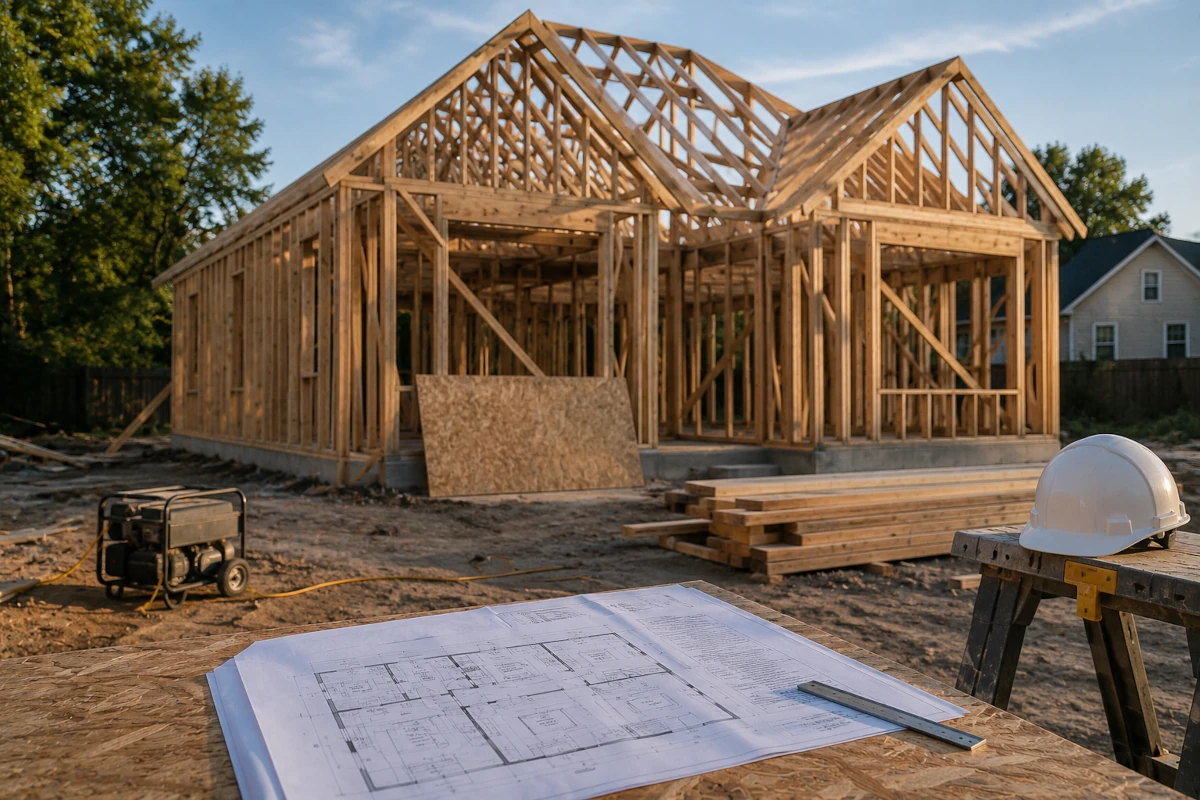
A ground-up construction loan is a short-term financing product that funds the entire process of building a new structure from scratch — from purchasing the land through completing construction. Unlike a traditional mortgage that finances an existing property, construction loans finance a property that does not yet exist.
These loans are structured around the construction timeline and disbursed in stages (called draws) as building milestones are completed. Once the project is finished, the investor either sells the completed property or refinances into a permanent long-term loan like a DSCR loan or conventional mortgage.
Ground-up construction loans are used by investors building:
- Single-family spec homes built to sell on the open market
- Custom homes built to order for a specific buyer
- Small multifamily (duplexes, triplexes, fourplexes) for rental or resale
- Townhome developments and small subdivisions
- Short-term rental properties in vacation markets
Construction lending is more complex than fix and flip financing because the project timeline is longer, the budget is larger, and more things can go wrong. But for investors who learn the process, new construction offers some of the highest profit margins in real estate.
How Construction Loans Work
Ground-up construction loans have a unique structure that reflects the phased nature of building:
Loan Components
A construction loan typically covers three categories of costs:
- Land acquisition: The purchase price of the lot. Some lenders will finance land purchase within the construction loan; others require you to own the land before applying. If you already own the lot, its equity can count toward your down payment.
- Hard costs: The direct construction costs — materials, labor, foundation, framing, roofing, mechanicals (HVAC, plumbing, electrical), finishes, and landscaping. This is the bulk of the budget.
- Soft costs: Indirect costs including architectural plans, engineering, permits, impact fees, surveys, inspections, insurance, and project management. Soft costs typically add 10–20% on top of hard costs.
Loan-to-Cost and Loan-to-Value
Construction lenders use two key ratios:
- Loan-to-Cost (LTC): Most lenders fund 75–85% of total project costs (land + hard costs + soft costs). You bring the remaining 15–25% as equity.
- Loan-to-Value (LTV): The total loan amount is also capped at 65–75% of the completed value (the appraised value of the finished project). Both LTC and LTV limits must be met.
Interest Structure
Construction loans are interest-only, and you pay interest only on the amount that has been drawn. At the start of the project when only land and initial site work have been funded, your monthly payment is low. As draws are released and the balance grows, your payment increases. This structure keeps carrying costs manageable during the early construction phases.
Loan Term
Most ground-up construction loans carry terms of 12 to 24 months, depending on the project scope. A simple single-family build might close out in 9 to 12 months, while a multi-unit development could need 18 to 24 months. Extensions are usually available for 1–2% of the loan amount.
Construction Loan Requirements
Ground-up construction lending has the most rigorous underwriting of any real estate loan type. Lenders are financing a property that does not exist yet, so they evaluate everything carefully:
Experience
This is the most important factor. Unlike fix and flip loans where first-timers can get funded, most construction lenders require at least 1 to 3 completed ground-up projects before they will approve a loan. Some lenders accept extensive renovation experience (major gut rehabs) as a substitute. If you are new to construction, partnering with an experienced builder and having that builder serve as the general contractor can help satisfy this requirement.
Credit Score
Minimum credit scores for construction loans are typically 660 to 680, higher than fix and flip requirements. The best rates and terms are reserved for borrowers with 720+ FICO scores.
Down Payment / Equity
Expect to bring 15% to 25% of total project costs as equity. If you already own the land free and clear, its value counts toward your equity contribution. For example, if you purchased a lot for $80,000 and total project costs are $400,000, you already have 20% equity before spending another dollar.
Detailed Plans and Budget
You will need to submit a comprehensive project package including:
- Architectural plans: Stamped, permitted, or permit-ready drawings
- Detailed construction budget: Line-item breakdown of every cost category
- Project timeline: Month-by-month construction schedule
- Contractor bids: Written bids from your general contractor and key subcontractors
- Comparable sales: Recent sales supporting your projected completed value
Reserves
Most lenders require 6 to 12 months of interest payments in reserve plus a construction contingency of 5–10% of the hard cost budget for unexpected expenses. Construction projects almost always encounter surprises — weather delays, material price increases, plan changes — and lenders want to see that you can absorb them.
The Construction Draw Schedule
The draw schedule is the backbone of construction lending. It controls how and when funds are released throughout the building process.
Typical Draw Stages
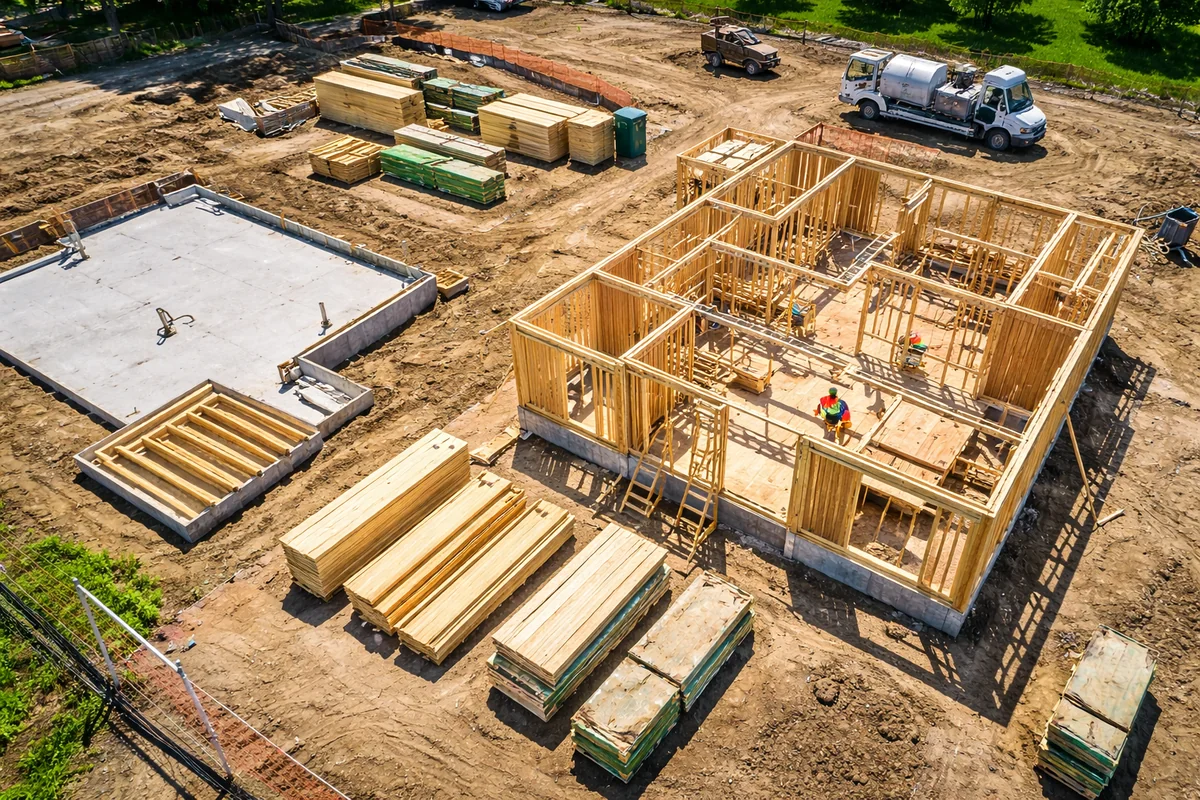
A standard ground-up construction project has 5 to 7 draw stages, each tied to a major construction milestone:
| Draw 1 — Land & Site Work | 10–15% |
| Draw 2 — Foundation | 10–15% |
| Draw 3 — Framing & Roof | 20–25% |
| Draw 4 — Mechanicals (HVAC, Plumbing, Electrical) | 15–20% |
| Draw 5 — Insulation, Drywall, Interior Rough | 10–15% |
| Draw 6 — Finishes (Cabinets, Flooring, Paint) | 10–15% |
| Draw 7 — Final (Landscaping, Punch List, CO) | 5–10% |
The Inspection Process
Before each draw is released, the lender sends a third-party inspector to verify that the work described in the draw request has been completed to standard. The inspector compares the current state of construction against the approved plans and budget. This process typically takes 3 to 7 business days from request to funding.
Managing Cash Flow Between Draws
The biggest operational challenge in construction is the gap between when you pay contractors and when draw funds arrive. Most general contractors expect payment within 30 days of completing their scope, but draw processing can take 5 to 10 business days. Maintain a working capital reserve of $20,000 to $50,000 specifically to bridge these gaps. Failure to pay contractors on time can cause work stoppages that blow up your timeline and budget.
Construction Loan Rates and Costs
Construction financing is priced at a premium reflecting the complexity and risk involved:
Interest Rates
Expect rates of 9% to 13% for private/hard money construction loans and 7% to 10% for bank construction loans. Bank loans offer better rates but require more documentation, longer approval timelines, and stricter builder requirements.
Points and Fees
- Origination points: 1.5 to 3 points (private lenders) or 0.5 to 1.5 points (banks)
- Construction appraisal: $2,000 to $5,000 (more complex than a standard appraisal because the appraiser must estimate completed value based on plans)
- Draw inspection fees: $150 to $350 per draw, typically 5 to 7 inspections per project
- Title updates: $200 to $500 at each draw to update the title policy
- Extension fees: 1 to 2% of the loan amount per extension period
Total Financing Cost
On a typical 12-month construction project, total financing costs (interest + points + fees) usually run 10% to 15% of the loan amount. This is higher than fix and flip financing because the project is longer and the loan amount is typically larger. Build this into your pro forma from day one.
Builder and Contractor Requirements
Lenders scrutinize your builder/general contractor almost as carefully as they evaluate you. The builder is responsible for executing the project, and lender confidence in them directly affects your approval:
What Lenders Look For
- Licensed and insured: Active general contractor license in the project state, plus general liability and workers compensation insurance with adequate coverage limits.
- Track record: Most lenders require the builder to have completed 3 to 5 comparable projects in the past 2 to 3 years. New builders with limited history will face more scrutiny.
- Financial stability: Some lenders review the builder's financial statements to ensure they have the working capital to manage the project between draws.
- References: Previous client references and, ideally, prior projects funded by the same lender.
Owner-Builder Projects
Some investors act as their own general contractor (owner-builder). Not all lenders allow this, and those that do typically require significant construction management experience and a resume of completed projects. If you go the owner-builder route, having licensed subcontractors for all specialty trades (electrical, plumbing, HVAC) is essential.

Permits and Approvals
Permitting is one of the most time-consuming parts of ground-up construction and a frequent source of delays and cost overruns:
Common Permits Required
- Building permit: The master permit covering the overall structure. Requires approved plans, engineering, and compliance with local building codes.
- Zoning approval: Confirms the proposed construction is allowed under the lot's zoning designation. May require a variance or special exception for non-conforming uses.
- Impact fees: Many municipalities charge fees for new construction to fund infrastructure improvements (roads, schools, utilities). These can range from a few thousand dollars to $30,000+ in some high-growth areas.
- Utility connections: Separate permits and fees for water, sewer, electric, and gas hookups.
- Environmental: Depending on location, you may need wetland assessments, stormwater management plans, or environmental impact studies.
Timeline Considerations
Permit approval can take 2 weeks to 6 months depending on the jurisdiction. Some cities have streamlined electronic review processes; others require multiple rounds of plan review and in-person hearings. Research your local permitting timeline before committing to a project schedule, and factor permit delays into your construction loan term.
Construction Loans vs Other Loan Types
| Feature | Ground-Up Construction | Fix & Flip | DSCR Loan |
|---|---|---|---|
| Purpose | Build from scratch | Renovate existing | Buy and hold |
| Loan Term | 12–24 months | 6–18 months | 30 years |
| Interest Rate | 9–13% | 9–13% | 6.5–8.5% |
| Down Payment | 15–25% | 10–20% | 20–25% |
| Draw Schedule | 5–7 draws | 3–5 draws | None |
| Experience Required | 1–3 builds minimum | Helpful but not required | None |
| Builder Required | Yes (licensed GC) | Contractors, not GC | No |
| Plans Required | Full architectural | Scope of work | No |
| Closing Speed | 21–45 days | 7–14 days | 21–30 days |
| Best For | Experienced developers | Active flippers | Rental investors |
The key advantage of construction loans over fix and flip financing is that you are creating a brand-new asset with no deferred maintenance, modern energy efficiency, and design choices optimized for today's buyers or renters. The trade-off is more complexity, longer timelines, and stricter qualification requirements.
Many investors combine products: build with a construction loan, then refinance into a DSCR loan to hold the property as a long-term rental. Read our step-by-step ground-up construction guide for beginners.
Pros and Cons of Ground-Up Construction Loans
Frequently Asked Questions
A ground-up construction loan is short-term financing (12 to 24 months) that funds the purchase of land and the full cost of building a new structure. Funds are released in stages through a draw schedule as construction milestones are completed.
Most lenders require 15 to 25 percent of total project costs as equity. If you already own the land, its value counts toward your equity contribution.
Yes. Most lenders require 1 to 3 completed ground-up projects. Partnering with an experienced licensed general contractor can help satisfy this requirement if you are newer to construction.
Most construction lenders require a minimum FICO score of 660 to 680, with the best terms available at 720 and above.
Construction funds are released in 5 to 7 stages as building milestones are completed. A third-party inspector verifies the work before each draw is funded. This typically takes 3 to 7 business days per draw.
Some lenders allow owner-builder projects, but they typically require significant construction management experience and a track record of completed projects. Licensed subcontractors are required for all specialty trades.
Most construction loans have terms of 12 to 24 months. Extensions are usually available for a fee of 1 to 2 percent of the loan amount.
You either sell the completed property and repay the loan, or refinance into a long-term mortgage such as a DSCR loan if you want to keep it as a rental.
Construction loans fund building from scratch with longer timelines, more draws, and stricter requirements. Fix and flip loans fund renovation of existing properties with shorter timelines and simpler underwriting.
At minimum you need a building permit, zoning approval, and utility connection permits. Depending on location, you may also need environmental assessments, stormwater plans, and impact fee payments.
Ground-Up Construction Loan Programs
BrightPath connects investors with experienced construction lenders. Finance your next build with competitive rates and flexible draw schedules.
Explore Construction ProgramsGet Funded
Finance Your Ground-Up Build
Construction financing structured around your draw schedule — line up the build before you close.
Check Your EligibilityFunding in as little as 21 days · No impact to your credit score