What Is a Fix and Flip Loan?
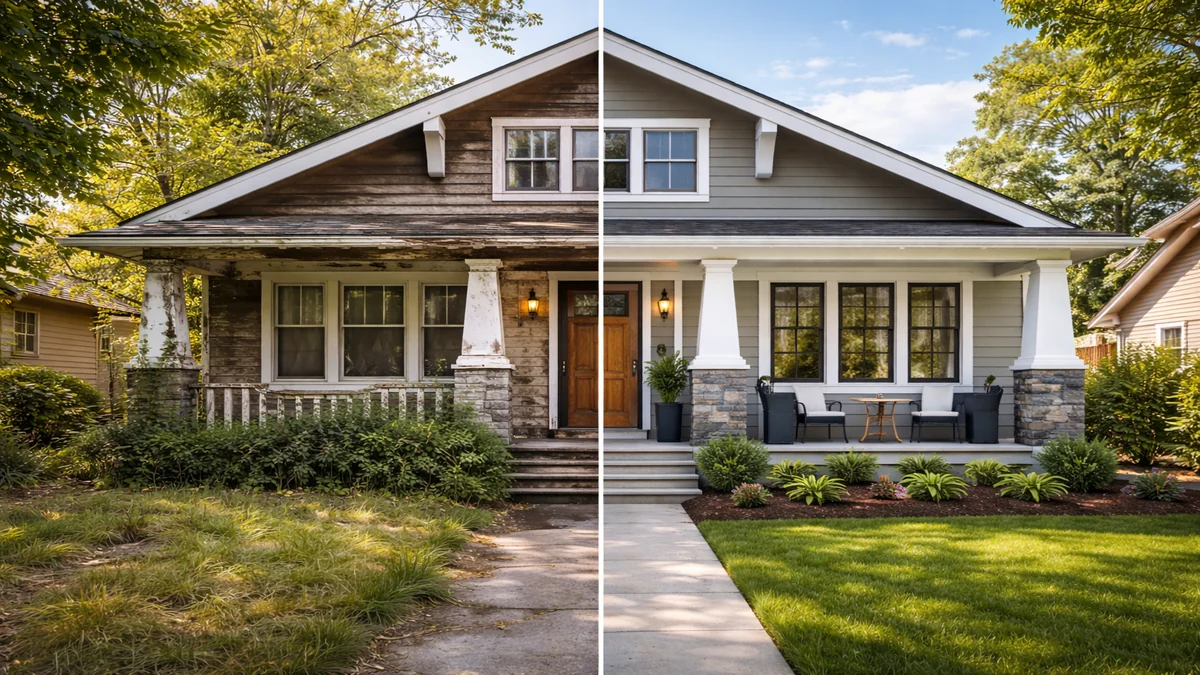
A fix and flip loan is a short-term financing product designed specifically for real estate investors who purchase distressed properties, renovate them, and sell them for a profit. Unlike traditional mortgages, fix and flip loans are structured around the entire project lifecycle — from acquisition through renovation to resale — typically lasting 6 to 18 months.
These loans are sometimes called rehab loans, bridge loans, or hard money loans, depending on the lender and the specific terms. What they all share is a focus on the property's after-repair value (ARV) rather than its current condition, which allows investors to finance properties that traditional banks would reject outright.
The basic concept is straightforward: a lender funds both the purchase price and the renovation budget, and the investor repays the loan when the property sells. The profit comes from the difference between the total project cost and the final sale price.
A Quick Example
You find a distressed property listed at $200,000. After renovation, comparable sales suggest it will be worth $320,000. Your rehab budget is $60,000. Here is how the numbers break down:
| Purchase Price | $200,000 |
| Renovation Budget | $60,000 |
| Carrying Costs (loan interest, insurance, taxes) | $15,000 |
| Selling Costs (agent commissions, closing) | $22,000 |
| Total Project Cost | $297,000 |
| After-Repair Value (ARV) / Sale Price | $320,000 |
| Net Profit | $23,000 |
This example shows a 7.7% net margin, which is thin. Most lenders and experienced flippers use the 70% Rule as a quick screen: never pay more than 70% of the ARV minus repair costs. In this case, 70% of $320,000 = $224,000 minus $60,000 = $164,000 maximum purchase price.

How Fix and Flip Loans Work
Fix and flip loans differ from traditional mortgages in almost every way. They are short-term, interest-only, and asset-based — meaning the lender cares more about the property and your project plan than your W-2 income.
Loan Structure
A typical fix and flip loan has two components:
- Acquisition funding: The lender covers 80–90% of the purchase price. You bring the remaining 10–20% as your down payment.
- Renovation funding: The lender covers up to 100% of the rehab budget, disbursed in stages as work is completed (this is the draw schedule, covered in detail below).
The total loan amount is typically capped at 70–75% of the ARV (After-Repair Value). So if a property will be worth $300,000 after renovation, the maximum total loan (purchase + rehab) would be around $210,000 to $225,000.
Interest-Only Payments
Unlike a traditional mortgage where you pay principal and interest monthly, fix and flip loans are interest-only. You pay only the interest each month (or in some cases, the interest is rolled into the loan balance). The full principal is due when you sell the property or refinance into a long-term loan.
Some lenders calculate interest only on the drawn amount — meaning you pay interest on the purchase price from day one, but only start paying interest on rehab funds as they are disbursed. This saves money during the early stages of a project.
Loan Terms
Most fix and flip loans carry terms of 6 to 18 months, with 12 months being the most common. Extensions are usually available for an additional fee (typically 1–2% of the loan amount per extension) if the project takes longer than expected.
The Exit Strategy
Every fix and flip lender will ask about your exit strategy before approving a loan. The two standard exits are:
- Sell the property: The most common exit. You complete the renovation, list it, sell it, and use the proceeds to repay the loan.
- Refinance into a long-term loan: If you decide to keep the property as a rental instead of selling, you can refinance into a DSCR loan or conventional mortgage. This is sometimes called the BRRRR strategy (Buy, Rehab, Rent, Refinance, Repeat).
Fix and Flip Loan Requirements
Fix and flip loans are more accessible than conventional mortgages, but lenders still evaluate several factors before approving a deal:
Credit Score
Most fix and flip lenders require a minimum FICO score of 620 to 660. Higher credit scores earn better rates — borrowers with 720+ credit can access rates 1–2 percentage points lower than borrowers near the minimum. Some hard money lenders will work with scores below 620 but at significantly higher rates.
Experience
Your track record matters. Lenders categorize borrowers by experience level:
- New investors (0 flips): Can still get funded, but expect lower leverage (75–80% of purchase price), higher rates, and more scrutiny of the project plan.
- Moderate experience (1–5 flips): Better terms become available. Most lenders open up their full product line at 3+ completed flips.
- Experienced (5+ flips): Access to the best rates, highest leverage (up to 90% of purchase), and fastest closings. Some lenders offer repeat-borrower programs with streamlined underwriting.
Down Payment
Expect to bring 10% to 20% of the purchase price as a down payment, plus enough cash to cover initial carrying costs. Some lenders also require that you contribute a portion of the rehab budget upfront before they begin releasing draw funds.
Property Requirements
The property itself is the collateral, so lenders evaluate it carefully:
- Property types: Single-family homes, 2–4 unit multifamily, townhomes, and condos are widely accepted. Some lenders also fund mixed-use and small commercial properties.
- Condition: Most fix and flip lenders will fund properties in any condition — including those needing major structural work. This is a key advantage over conventional loans.
- Location: Urban and suburban properties in markets with strong resale demand are preferred. Rural properties or those in declining markets may face additional scrutiny.
Reserves
Lenders typically require 3 to 6 months of interest payments in reserve after closing. This ensures you can cover carrying costs if the project takes longer than planned.
Fix and Flip Loan Rates and Costs
Fix and flip financing is more expensive than long-term mortgages, reflecting the higher risk and shorter duration. Here is what to expect in 2026:
Interest Rates
Rates typically range from 9% to 13%, depending on your experience level, credit score, leverage, and the lender. Experienced flippers with strong credit and lower leverage can access rates on the lower end, while newer investors or higher-risk deals will be closer to 12–13%.
Origination Points
Most lenders charge 1.5 to 3 points (percentage of the loan amount) at closing. On a $250,000 loan, that is $3,750 to $7,500 in upfront fees. Some lenders offer lower points in exchange for higher interest rates, or vice versa — choose based on your expected project timeline.
Other Costs
- Appraisal / BPO: $400 to $1,500 for an ARV appraisal
- Processing / underwriting: $500 to $1,500
- Draw inspection fees: $150 to $300 per draw (the lender sends an inspector to verify work completion before releasing funds)
- Extension fees: 1–2% of the loan amount if you need more time
- Prepayment: Most fix and flip loans have no prepayment penalty — a key advantage, since you want to repay as soon as the property sells
Total Cost of Capital
When you factor in interest, points, and fees on a typical 6–9 month flip, your total borrowing cost usually runs 6% to 10% of the loan amount. This needs to be built into your profit analysis from the start. The single biggest mistake new flippers make is underestimating carrying costs.
The Draw Schedule Explained
The draw schedule is unique to fix and flip (and construction) loans. Instead of receiving all the renovation funds at once, the lender disburses money in stages as work is completed and verified. This protects the lender and keeps the project on track.
How Draws Work
Here is the typical process for each draw:
- Step 1: You complete a phase of work (for example, demolition and framing).
- Step 2: You request a draw from the lender, documenting the completed work with photos.
- Step 3: The lender sends a third-party inspector to verify the work matches the approved scope.
- Step 4: Once approved, funds are wired — typically within 3 to 5 business days.
Common Draw Structures
Different lenders structure draws differently:
- Percentage-based: Funds released based on percentage of total rehab completed (e.g., 25%, 50%, 75%, 100%).
- Milestone-based: Funds tied to specific project milestones (demolition complete, rough-in complete, finishes complete).
- Line-item based: Each budget line item is funded individually as completed. This is the most granular approach.
Draw Schedule Tips
Budget for out-of-pocket costs between draws. You will often need to pay contractors before the draw is released, creating a cash flow gap. Experienced flippers maintain a working capital reserve of $10,000 to $30,000 specifically for this purpose. Also, submit draw requests promptly — every day you wait is a day of additional interest expense.
Fix and Flip Loans vs Other Loan Types
Understanding how fix and flip loans compare to other financing options helps you choose the right tool for each deal:
| Feature | Fix & Flip Loan | DSCR Loan | Conventional |
|---|---|---|---|
| Purpose | Buy, renovate, sell | Buy and hold rentals | Buy and hold |
| Loan Term | 6–18 months | 30 years | 15–30 years |
| Interest Rate | 9–13% | 6.5–8.5% | 6–7.5% |
| Payment Type | Interest-only | P&I or IO | P&I |
| Rehab Funding | Yes (draw schedule) | No | No |
| Income Verification | None (asset-based) | None (property income) | Full docs |
| Min. Credit Score | 620–660 | 660–680 | 620–680 |
| Closing Speed | 7–14 days | 21–30 days | 30–45 days |
| Prepay Penalty | None (usually) | 3–5 years | None |
| Best For | Active flippers | Rental investors | First-time investors |
The key distinction: fix and flip loans are project-based financing designed to be repaid quickly, while DSCR loans and conventional mortgages are long-term hold products. Many investors use both — a fix and flip loan to acquire and renovate, then refinance into a DSCR loan if they decide to keep the property as a rental. Read our detailed comparison of hard money vs. fix and flip loans.
The Fix and Flip Timeline
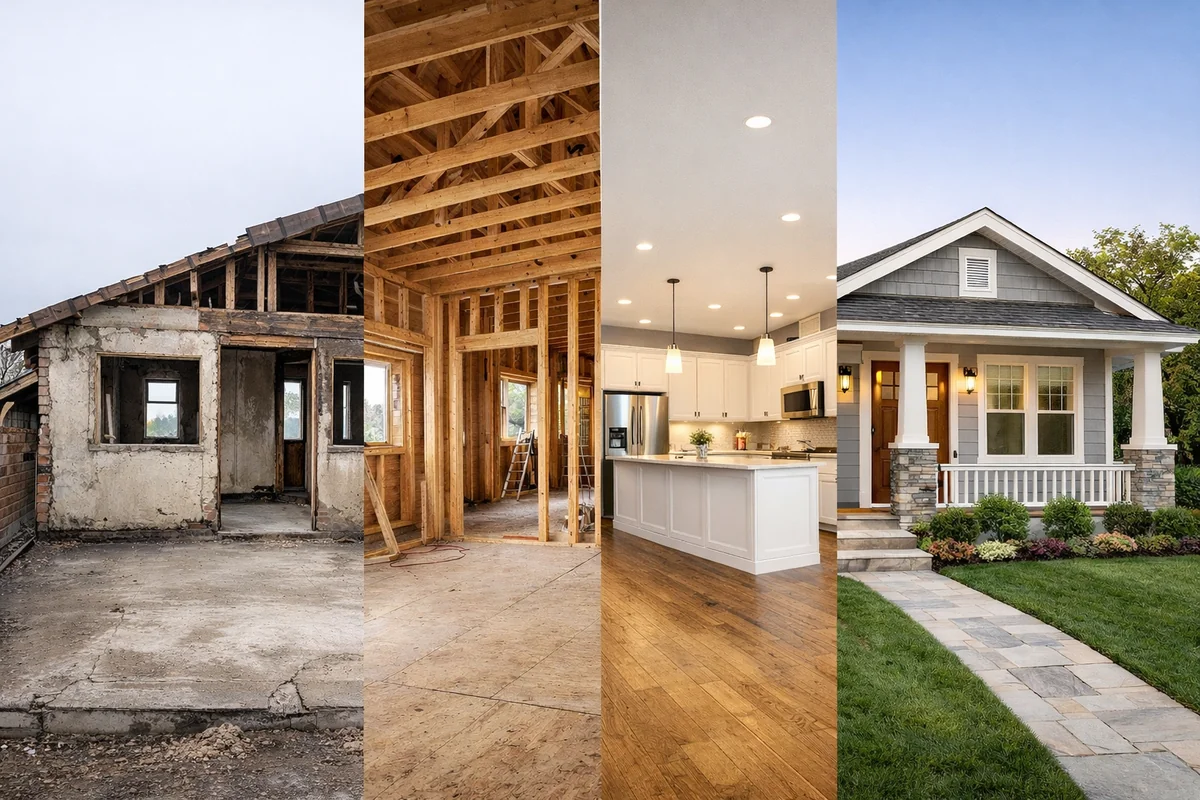
A typical fix and flip project follows a predictable timeline. Understanding each phase helps you budget time and money accurately:
Phase 1: Deal Sourcing (Ongoing)
Finding profitable deals is the hardest part of flipping. Most experienced flippers evaluate dozens of properties for every one they purchase. Sources include the MLS, foreclosure auctions, wholesalers, direct mail campaigns, and driving for dollars.
Phase 2: Due Diligence and Closing (1–3 Weeks)
Once you identify a deal, you need to move fast. Run your ARV analysis using recent comparable sales, get contractor bids for the renovation scope, and apply for financing. Fix and flip loans can close in as little as 7 days, which gives you a competitive advantage over buyers using conventional financing.
Phase 3: Renovation (1–4 Months)
This is where the value is created. The renovation timeline depends on the scope of work. Cosmetic flips (paint, flooring, fixtures) can be completed in 4 to 6 weeks. Full gut renovations with structural work, new mechanicals, and additions can take 3 to 4 months or longer.
Phase 4: Listing and Sale (1–3 Months)
Once renovation is complete, the property is staged, photographed, and listed. In strong markets, well-priced flips can sell within 2 to 4 weeks. In slower markets, budget for 60 to 90 days on market. Every month the property sits unsold costs you interest and carrying expenses.
Total Timeline
Most flips take 4 to 8 months from purchase to sale. Your loan term should provide a comfortable buffer beyond your expected timeline. If you anticipate a 6-month project, a 9 to 12 month loan term gives you room for delays.
Finding Profitable Fix and Flip Deals
The profit in a flip is made at purchase, not at sale. Overpaying for a property is the single most common reason flips fail. Here are the primary channels experienced flippers use to source deals:
The 70% Rule
Before evaluating any deal, apply this quick filter: Maximum Purchase Price = (ARV x 70%) – Repair Costs. If the asking price is above this number, the deal likely does not have enough margin. The 70% accounts for your profit, carrying costs, and selling expenses.
Deal Sources
- MLS (Multiple Listing Service): Publicly listed properties. Competition is higher, but deals exist — especially with properties that have been sitting for 60+ days or have price reductions.
- Wholesalers: Investors who contract properties at a discount and assign the contract to you for a fee (typically $5,000 to $15,000). Good wholesalers can be a reliable deal pipeline.
- Foreclosures and auctions: Bank-owned (REO) properties and foreclosure auctions often sell below market value. Auctions require cash or proof of funds at closing.
- Direct to seller: Direct mail campaigns, online ads, and door-knocking targeting distressed homeowners (pre-foreclosure, probate, divorce, tax delinquent) can surface off-market deals.
- Driving for dollars: Physically driving neighborhoods looking for vacant or distressed properties, then contacting the owner directly.

Pros and Cons of Fix and Flip Loans
Fix and flip loans are powerful tools, but they come with real trade-offs:
Frequently Asked Questions
A fix and flip loan is short-term financing (6 to 18 months) designed for investors who buy distressed properties, renovate them, and sell them for profit. The loan covers both the purchase price and renovation costs.
Most lenders require 10 to 20 percent of the purchase price as a down payment, plus cash reserves for carrying costs between draws.
Most lenders require a minimum FICO score of 620 to 660. Higher scores earn better rates, and borrowers with 720 or above access the most competitive terms.
No, but experience helps. First-time flippers can get funded but will typically face lower leverage, higher rates, and more documentation requirements. Having a strong contractor team and detailed project plan helps.
Fix and flip loans can close in as little as 7 days with complete documentation.
The 70 percent rule states that you should pay no more than 70 percent of the after-repair value minus repair costs. For example, if a property will be worth 300K after repairs and needs 50K in work, you should pay no more than 160K.
A draw schedule is the process by which renovation funds are released in stages as work is completed and verified by a third-party inspector. This protects the lender and ensures funds are used as intended.
The loan itself must be repaid within its term. However, many investors use the BRRRR strategy: buy with a fix and flip loan, renovate, then refinance into a long-term DSCR loan once the property is stabilized.
They overlap significantly. Hard money is a broader term for asset-based lending from private sources. Fix and flip loans are a specific type of hard money loan designed for renovation projects. Not all hard money loans are fix and flip loans.
Most lenders offer extensions for an additional fee, typically 1 to 2 percent of the loan amount. If you cannot sell or refinance, the lender may begin foreclosure proceedings. Always build a buffer into your timeline.
Get Funded
Fund Your Next Fix & Flip
Fast hard-money and bridge financing built for flips — competitive terms so you can close and start the rehab.
Check Your EligibilityFunding in as little as 7 days · No impact to your credit score