|
||||||||||||||||||||

|
||||||||||||||||||||
|
Hey {{ contact.FIRSTNAME | default: "there" }},https://brightpathloans.com/assets/images/nl_logo.png" t-size: 15px; line-height: 1.7;">
Mortgage rates fell for a second straight week, Investor Intel This week: what Wednesday's Fed minutes reveale |
||||||||||||||||||||
|
||||||||||||||||||||
|
|
||||||||||||||||||||
Freddie Mac's Thursday survey put the 30-year fixed at 6.65%, down from 6.67% and falling for a second consecutive week. The 15-year eased to 5.95%. Read in isolation, that's a market calming down. It isn't. Over the same stretch, the 10-year Treasury climbed to 4.74%, within a few basis points of its highest level in twenty months, and the 30-year bond reached 5.25%. Long-dated yields have been rising since July on heavy corporate issuance and deficit spending, and last week the Treasury Department's announcement that it would at least double long-maturity buybacks to $4 billion produced a rally that fizzled within a day. Mortgage rates falling while the benchmark they're priced off rises means one thing: the spread is compressing. That's a cushion being spent, not a trend forming. Cushions run out. Wednesday's FOMC minutes explained why the pressure hasn't left. The committee held at 3.50–3.75% on a 9–3 vote, with regional presidents Logan, Hammack, and Kashkari all voting to raise. The minutes went further than the vote count: several participants favored a 25 basis point increase at that meeting — more officials than actually dissented — and many assessed that tightening would likely become necessary if inflation didn't decline. And yet the market has moved the other way. Odds of a September hike have fallen to roughly one in three, down from about 82% in mid-July, after soft retail sales and a weak payrolls report. That gap — between what the minutes describe and what traders are pricing — is the entire question this week resolves.
Sources: Freddie Mac PMMS (August 20, 2026), U.S. Treasury, Federal Reserve FOMC minutes (July 28–29 meeting), HomeAbroad. DSCR figure is a third-party par benchmark, not a quote.
Why Friday matters more than usual. Warsh has spent his first months as Chair dismantling forward guidance — shorter statements, fewer signals, every meeting effectively live. He has described the Jackson Hole speech as a blank piece of paper. With no guidance to fall back on, twenty minutes on Friday morning carries the weight that a full dot plot used to. Investor pricing near 6.12% still sits roughly half a point below the headline 30-year, an inversion that has held for over a month because private credit spreads reprice on a lag. A lag is not a promise.
|
||||||||||||||||||||
|
📖 Featured Article
|
||||||||||||||||||||
|
|
||||||||||||||||||||
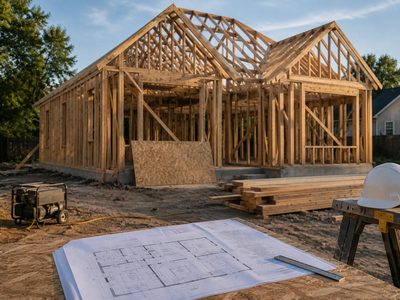
July's new residential construction report contained two numbers pointing in opposite directions. Housing starts fell 12.4% to a 1.239 million annual pace — the second-lowest reading of the post-pandemic period, and 13.5% below July 2025. Single-family starts dropped 9.9% to 808,000. Permits went up. Authorizations rose 5.0% to 1.443 million, 3.1% above a year ago, with single-family permits up 2.5%. Builders filed for more approvals in the same month they poured dramatically fewer foundations.
Seasonally adjusted annual rates. Source: U.S. Census Bureau and HUD, New Residential Construction (August 18, 2026). The explanation is straightforward once you separate the two decisions. A permit is cheap optionality. A start is a capital commitment. Builders are keeping the pipeline warm and declining to fund it at current financing costs — particularly with new-home inventory already above nine months of supply and incentives doing the work of moving it. Starts fell in three of four regions, with the Midwest down 27.6%, the West down 13.8%, and the South down 12.6%. Only the Northeast rose. For anyone holding property, the number that matters most is the last row. Completions are down 16.8% year over year — and completions are the supply that will compete with your rental and your resale in 2027. Today's start shortfall is next year's inventory shortfall. That's the case for building into a slow patch rather than out of one: the permitted-but-unstarted backlog sitting on builders' books right now is a real acquisition target, and the projects that break ground this quarter deliver into a thinner market than the ones that broke ground last year.
|
||||||||||||||||||||
|
📘 Featured Guide
|
||||||||||||||||||||
|
|
||||||||||||||||||||
We flagged this release last week, and it landed Thursday. Cotality's Single-Family Rent Index for June showed national rents up 1.5% year over year — the fourth consecutive month of stronger annual gains and the fastest pace since late 2025. That's a genuine improvement on the 1.3% we cited last week, though still well below the 2.5% of a year earlier. Then look at where the growth actually is. High-end rentals rose 2.4%. Low-end rentals rose 0.4% — the second month in a row at that level. The national figure is an average of two markets that are not behaving alike.
Source: Cotality Single-Family Rent Index, June 2026 data (released August 20, 2026). The metro spread is just as wide. Chicago led at 5.0%, followed by Detroit at 3.4%, Philadelphia at 3.2%, and New York at 2.8%. At the other end, Houston posted its fifth consecutive month of negative rent growth at −0.2%, with Dallas barely positive at 0.2%. A low-end rental in Houston and a high-end rental in Chicago are not in the same market, and no national average will tell you which one you own. There's a strategic read buried in that tier gap. When the top of the market is growing at six times the pace of the bottom, moving a property up a tier through renovation captures more than adding another door at the bottom does. That's a value-add decision — a flip, or the rehab leg of a BRRRR — not a buy-and-hold one, and it needs financing that funds the rehab alongside the purchase.
|
||||||||||||||||||||
|
||||||||||||||||||||
|